Hațeg Country UNESCO Geopark
The dwarf dinosaur geopark: over 1,000 km² of Țara Hațegului, internationally recognised since 2005 and a UNESCO Global Geopark since 2015.
The geopark covers the town of Hațeg and the communes of Baru, Densuș, General Berthelot, Pui, Răchitova, Râu de Mori, Sarmizegetusa, Sălașu de Sus, Sântămăria-Orlea and Totești. It was declared a protected area in 2004, joined the European and Global Geoparks Networks in 2005 — the first geopark in South-East Europe to do so — and has been a UNESCO Global Geopark since 2015. It is managed by the University of Bucharest.
Its stars are the dwarf dinosaurs of the Late Cretaceous, some 70 million years ago, when the area was an island — “Hațeg Island”. Finds here include dinosaur nests with eggs and embryos, mammals that lived alongside the dinosaurs and the flying reptile Hatzegopteryx. The first dinosaur bones were discovered in 1895 on the Nopcsa family estate, and Baron Franz Nopcsa built on them his theory of insular dwarfism.
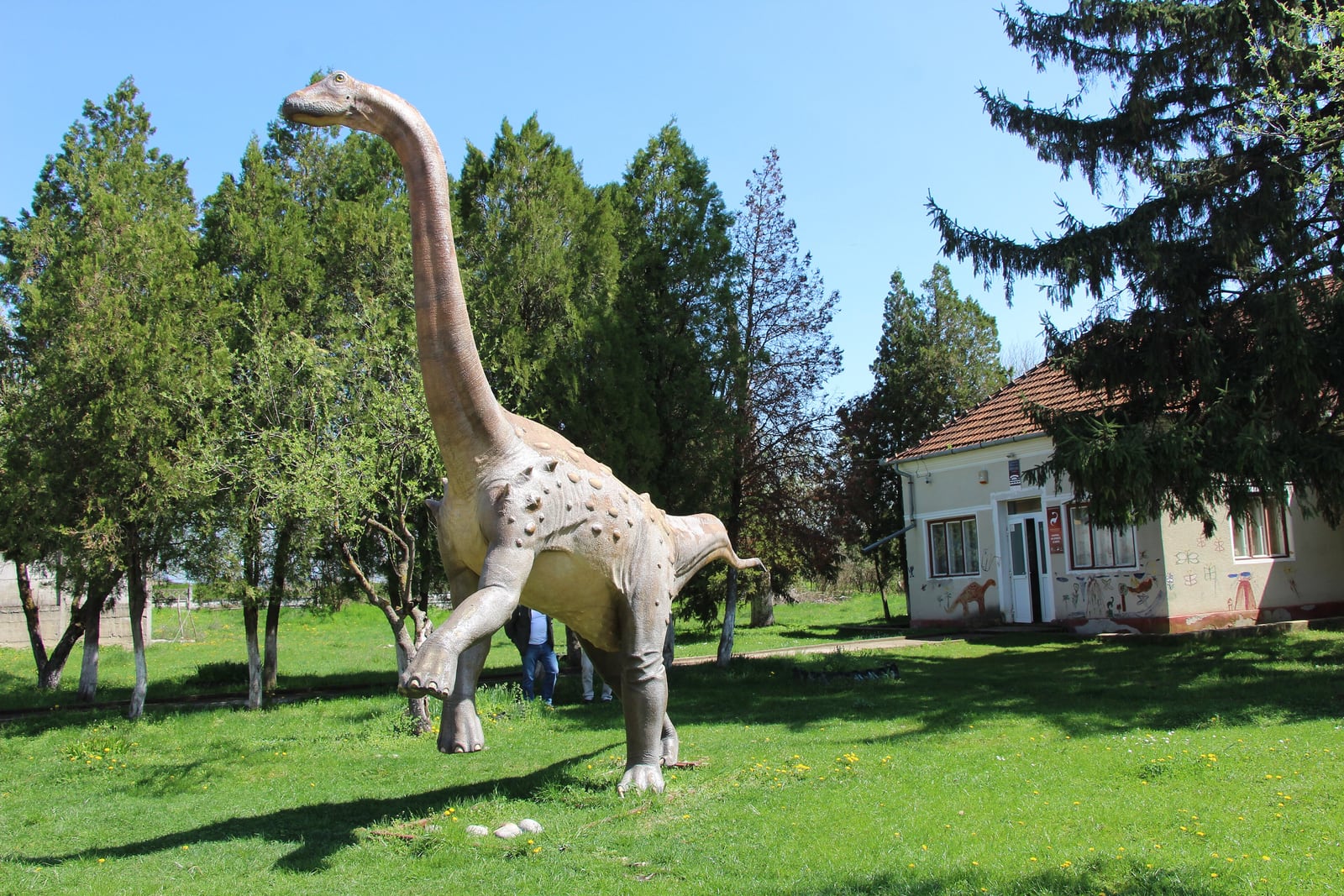
The geopark is explored through its “geopark houses”, visitor and interpretation centres: The Geopark House in Hațeg (with a reconstruction of the dinosaur Balaur bondoc), the House of Science and Art in General Berthelot (with a life-size Magyarosaurus dacus in the yard and original nests with dinosaur eggs), the House of Dwarf Dinosaurs in Sânpetru and the House of Volcanoes in Densuș. Opening hours vary with the season, and some houses can only be visited by appointment.
That entry does not exist.
← Back