Germisara Roman Baths
The Roman baths of Geoagiu-Băi, with pools cut into the rock, where gold offerings were made to the deities of the warm springs.
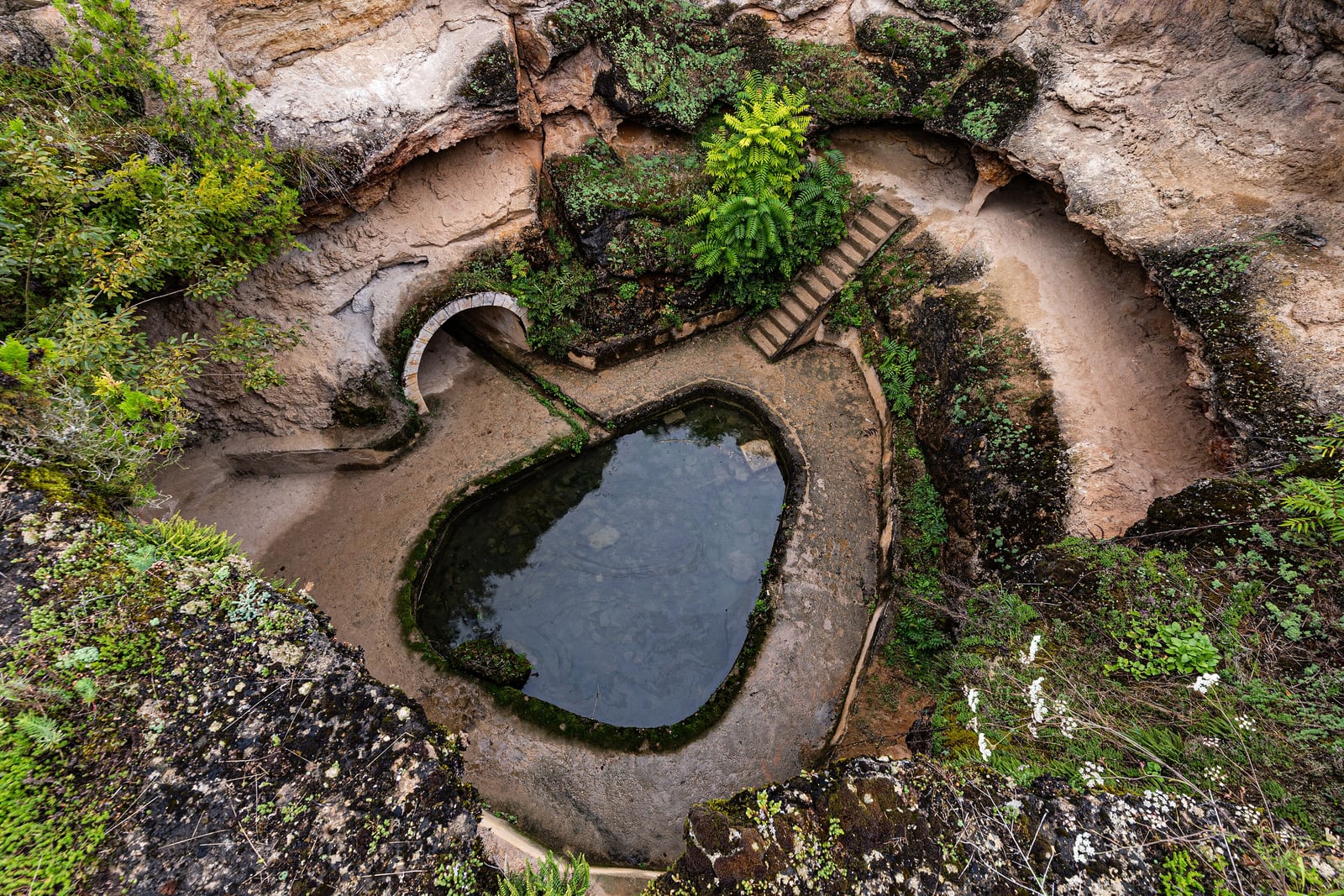
The name Germisara is of Dacian origin, means “hot water” and appears on the Tabula Peutingeriana and in the geographer Ptolemy. The baths lie in the centre of the Geoagiu-Băi resort, on a circular promontory 90–95 m across, where the rock-cut pools, drainage channels and traces of cult buildings are still visible. The baths were used in two phases, as Germisara and later as Thermae Dodonae.
In 1935, while a pool of the modern lido was being dug, statues of Aesculapius and Hygieia were found. In 1986–1987, altars and votive statues dedicated to the Nymphs and to Diana came to light, along with seven gold votive plaques made in the repoussé technique — five with inscriptions, two showing Diana and a group of three nymphs. The plaques now belong to the Museum of Dacian and Roman Civilisation in Deva.
About 5 km south of the resort, near the village of Cigmău, lie the ruins of the Roman fort of Germisara, which guarded the Mureș valley.
That entry does not exist.
← Back